梅兰芳
After the desert turns green, harder work begins_我的网站

A |
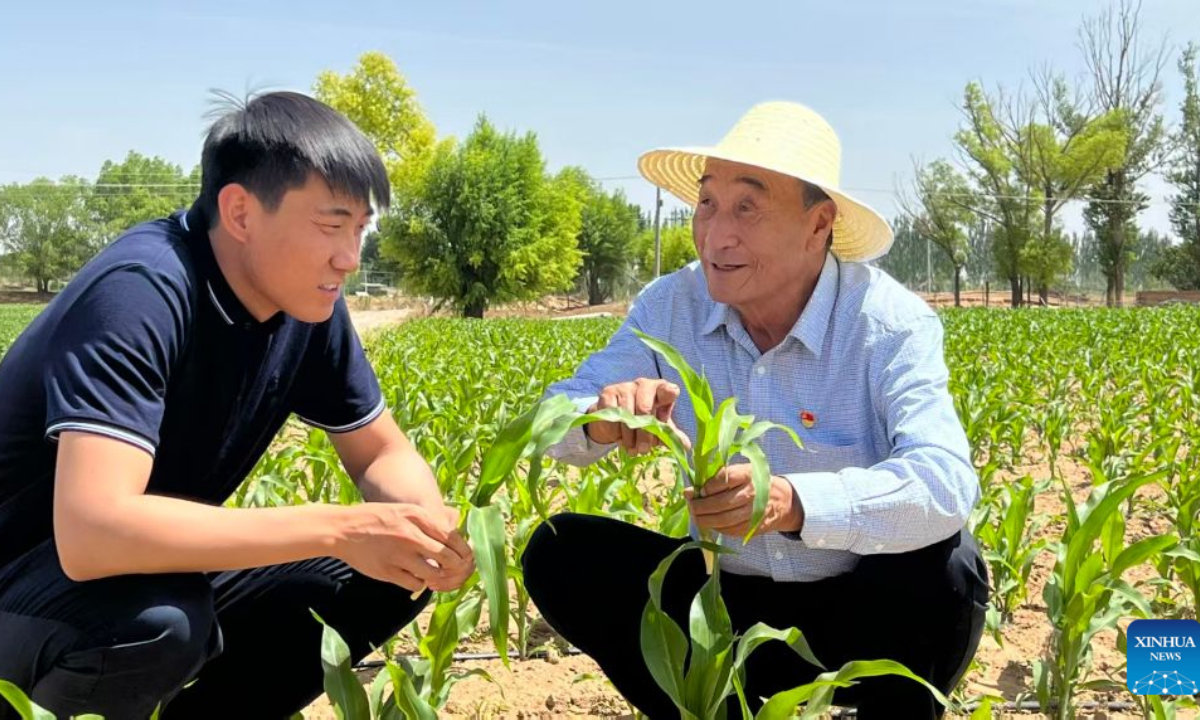
Shi Jianyang (L) and his grandfather check the growth of crops on a farmland near a forest area along the Maowusu Desert in northwest China's Shaanxi Province in 2026.(Xinhua)A drone sweeps above the pine forest, sending images of the woods to a screen below. Under the trees stands Shi Jianyang whose grandfather and hundreds of villagers came 40 years ago with shovels and saplings to stop advancing sand.
At 29, Shi belongs to a new generation of desert-control workers equipped with drones, machines and remote irrigation systems. An earth auger can now do in a day what once required about 200 laborers, while a single phone can control drip irrigation across more than 1,000 mu (about 66.67 hectares) of woodland.
For the older Shi's generation, the challenge was getting trees to survive in moving dunes. For the grandson, it is figuring out how to make those forests healthier and more resilient for decades to come.
Their story captures a broader shift in desert control along the southern edge of the Maowusu Desert in northwest China's Shaanxi Province: turning shifting sand into forest was only the beginning.
In 1986, Shi Guangyin, Shi Jianyang's grandfather, led more than 300 villagers into Langwosha, a sandy area in Dingbian County in Yulin City. He had raised 60,000 yuan (about 17,377 U.S. dollars at the time) by selling his family's 84 sheep and borrowing from relatives and banks to contract 3,500 mu of barren sandy land.
The early setbacks were severe. Strong winds destroyed about 90 percent of the saplings in the first year, and about 80 percent of those planted the following year failed to survive.
After seeking advice from forestry experts, Shi and the villagers laid out checkerboard-shaped barriers on windward slopes to hold the sand in place, then planted trees, shrubs and grasses within them. Sapling survival rates rose to about 80 percent.
Over the next four decades, Shi and those working alongside him treated 250,000 mu of sandy and saline-alkali land, with more than 53 million trees and shrubs taking root.
Greening the Maowusu Desert is part of a much larger national undertaking. It is one of the three major battlefronts of China's Three-North Shelterbelt Forest Program, a decades-long effort to curb desertification across northern China.
China has made desertification control a national ecological priority. Since 2023, the country has stepped up efforts under the program, with greater emphasis on systematic restoration and on consolidating earlier gains.
Decades after the first trees took root, a new challenge emerged. Poplars planted decades ago for their rapid growth began reaching the end of their life cycle, with large numbers of trees dying, while forests dominated by a single species were more vulnerable to pests and disease.
Making a forest was one challenge. Keeping it healthy for another generation is another.
Shi Jianyang grew up watching his grandfather and father work to hold back the sand. His father, Shi Zhanjun, spent years planting trees alongside Shi Guangyin before dying in a road accident in 2008 while transporting saplings.
As a boy, Shi Jianyang sometimes resented the work that had taken his father. He spent summer holidays in makeshift tents in the sandy land, eating meals gritty with sand. During planting season, his father would return home with painful blisters in his mouth.
Yet he eventually chose forestry himself.
After studying forestry technology in university, Shi returned home in 2020 and began working in desert control. His team, initially made up of just seven or eight young locals, later brought in university graduates with expertise in soil science, landscaping and pest control.
The younger generation faced a different question: not simply how to make trees survive, but how to make a forest last.
Shi and his team spent more than 40 days in a 5,000-mu woodland setting up sample plots, measuring rainfall, studying soil microorganisms and tracking tree lodging. They proposed renewing aging forests with better-planned forest structures and expanded the planting of Mongolian pine, a long-lived evergreen species that had been successfully tested locally.
To date, about 50,000 mu of land has been planted with Mongolian pine. As some trees fail to survive and require replacement in subsequent planting seasons, the cumulative area of planting operations has reached about 65,000 mu.
Technology has also changed daily work. Drones patrol forests from the air, mechanized equipment dig planting pits, and irrigation can be managed remotely. Sapling survival rates, which Shi Guangyin's generation had raised to about 80 percent through improved sand-control and planting methods, have climbed further to about 92 percent with greater mechanization and more precise management.
Shi said the changes can be felt on the ground. Strong sandstorms have become rare, winds are weaker inside the forest, and the ground stays moist longer after rain. Summer days beneath the trees also feel cooler, while morning dew appears more often. The changes lead him to rethink desert control.
His approach also reflects a broader effort in China's desert regions to link ecological restoration with local livelihoods, giving communities a stronger economic stake in protecting restored land.
With his grandfather's support, Shi and his team have been looking for ways to make better use of the restored land as ecological conditions improve. They have developed potato seedlings suited to sandy soil, promoted greenhouse farming, and set up a livestock cooperative, while increasingly growing potatoes, watermelons and peppers on land once prone to losing water and nutrients.
Shi has also turned to livestreaming e-commerce to market potatoes and other local farm produce, while developing forest-based health and leisure projects. More than 2,000 local residents have seen their incomes rise steadily as farming, livestock breeding and other businesses have developed.
"We used to fear the sand and keep away from it. Now we understand it and know how to make use of it," Shi Guangyin said. "Today, there are opportunities to make a living everywhere in this sandy land."
Across Yulin, forest coverage has risen from 1.8 percent in 1949 to 34.8 percent, while shifting dunes that once encroached on villages have been brought under control.
For Shi Jianyang, however, the green landscape is not proof that the work is finished. "Planting a tree is not difficult," he said. "The difficult part is looking after it for decades."
The grandfather generation learned how to stop the sand. The young generation is learning how to make what grew there last.
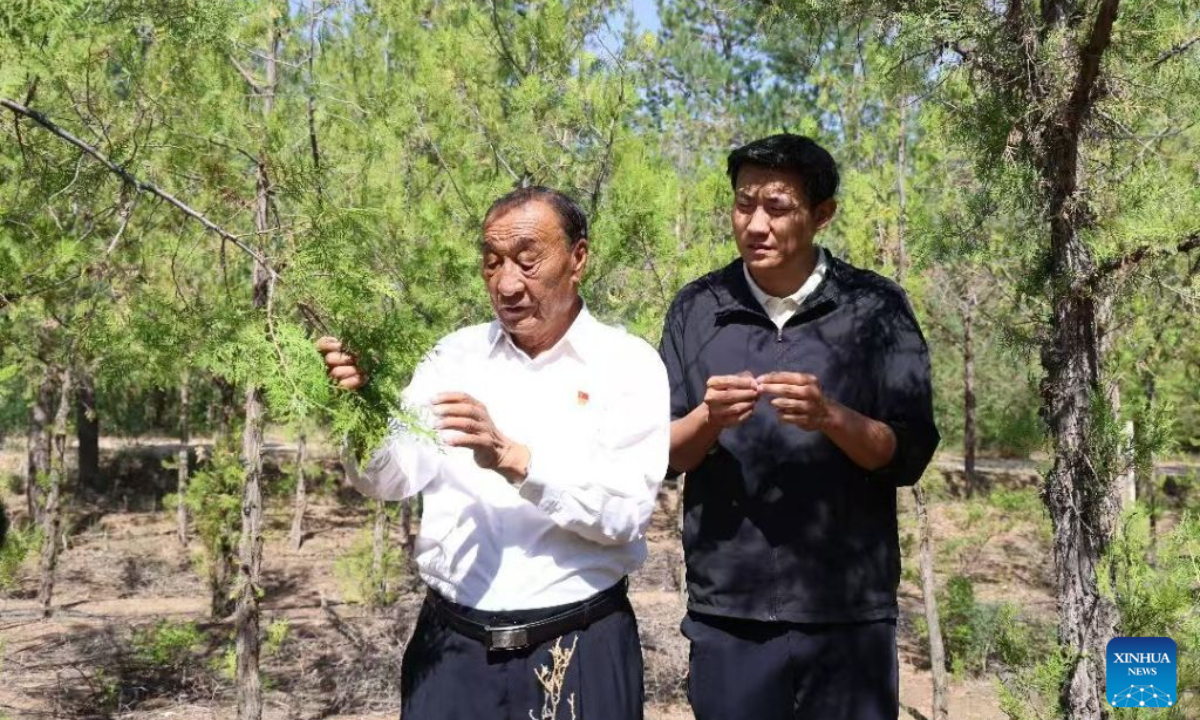
Shi Jianyang (R) and his grandfather check tree growth in a forest area in Dingbian County in Yulin City, northwest China's Shaanxi Province in 2026. (Xinhua)
。

B |

Medicine File photo: VCG
China has granted marketing approval of its first drug for the prevention of acute mountain sickness, filling the long-standing gap in the domestic market where no such medications had been available, Science and Technology Daily reported on Tuesday.
The National Medical Products Administration (NMPA) has approved the marketing of acetazolamide sustained-release capsules, the report said. As the first specialized drug in China indicated for preventing of acute mountain sickness, its approval marks the end of the country's lack of dedicated preventive treatment for altitude illness.
By inhibiting the activity of carbonic anhydrase, acetazolamide promotes the renal excretion of bicarbonate, corrects respiratory alkalosis caused by hypoxia at high altitudes, thereby regulating acid-base balance, optimizing respiratory status, elevating blood oxygen levels, and reducing the risk of onset at the source.
In contrast to health products that only provide auxiliary regulatory effects, this medication has been validated through stringent clinical trials and stands as a specialized drug approved by the NMPA with a clear indication for prevention, said the report.
Led by principal investigator is Luobu Gesang, a deputy dean of the People's Hospital of Xizang Autonomous Region, the clinical trial was designed by his team and has yielded critical evidence to inform prevention strategies for altitude sickness that are specifically adapted to Chinese and Asian populations.
"Previously, although acetazolamide had already been used internationally for the prevention of acute mountain sickness, China had long lacked an NMPA-approved acetazolamide formulation supported by rigorous clinical trials. Furthermore, the existing international formulations were short-acting tablets requiring multiple daily doses, and no drugs with the relevant indication were available on the domestic market for an extended period," said Luobu Gesang.
The sustained-release capsule approved this time not only fills this critical gap but also optimizes the dosage form, providing more reliable and convenient medication protection for the physical health and life safety of people entering high-altitude areas, he added.
Clinical trials showed that, compared with the placebo group, the incidence of acute mountain sickness in the medication group was significantly reduced, with the incidence of moderate-to-severe acute mountain sickness decreasing by 14.6 percent, according to the report.
Related research has been published in the international flagship journal of high-altitude medicine, High Altitude Medicine & Biology.
Global Times
。

C |
Current article:http://vpyiro.zhouangnaoguangsundianzhenmou.cfd/8nr/20260826/4147932.html
Published on:15:18:08