大秦帝国
French Court Sentences Rwandan Genocidaire Laurent Bucyibaruta to 20 Years in Prison_我的网站

一 | Bucyibaruta, 78, was found guilty of complicity in the massacres of nearly 1 million people in 1994 by the Hutu Power movement.,In particular, he was found responsible for leading thousands of Tutsis to take refuge in the Murambi Technical School, promising that French troops there would protect them from the violence. Instead, the refugees were denied food and water for days. The weakened refugees defended themselves with rocks for several days, but were overrun on April 21, 1994, when the French troops disappeared. At least 20,000 Tutsis were executed at the school, while those who escaped were found and killed at a nearby church a few days later.,The school is now a memorial and museum about the genocide, which ended that summer, roughly 100 days after it began, when the Tutsi Rwandan Patriotic Front (RPF) led by now-President Paul Kagame overthrew the Hutu Power government.,The French court also looked at Bucyibaruta's responsibility for another smaller massacre at a school in Kibeho, and the execution of several Tutsi prisoners in Gikongoro prison. In the trial, the former prefect denied all responsibility or connection, saying he “was never on the side of the killers.”,Bucyibaruta is the highest-ranking Rwandan official who has been taken to trial in France in connection with the genocide. In May, Protais Mpiranya, who was commander of the Rwandan presidential guard at the time of the genocide and played a key role in drawing up and executing the “kill lists” of officials during its initial stages, was found to have died in Zimbabwe in 2006, where he hid under a false name.,The killing was the product of decades of divide-and-rule colonial policy by German and then Belgian rulers, and continued by France after Rwanda gained independence in 1960. The teachings pitted the Hutu and Tutsi ethnic groups against each other, with Hutus being taught that the Tutsis were invaders occupying their land. The Hutu Power ideology elevated this attitude to genocidal proportions, and after then-Rwandan President Juvenal Habyarimana’s aircraft was shot down on April 6, 1994, his Hutu allies sprung into action, blaming Tutsis as well as moderate Hutus for the attack.,Roughly 10,000 Twa people, a separate ethnic group, were also killed in the genocide, amounting to one-third of the Twa population.,In February, a French court blocked an attempt by families of the victims of the crash to reopen an investigation that had ended inconclusively. The crash also killed Burundian President Cyprien Ntaryamira; both men were Hutus.,In May 2021, French President Emmanuel Macron met with Kagame in Kigali, but while he did not apologize for France’s support for the Rwandan government at the start of the genocide, he did acknowledge “the magnitude of our responsibilities.”,Two other French reports from earlier that year found the government of then-French President Francois Mitterrand bore “overwhelming responsibilities” for the genocide for continuing its divide-and-rule tactics while being fully aware of Hutu preparations for a genocide of Tutsis, as well as arming, advising and protecting the Hutu-led Rwandan government.,After the Hutu government was overthrown in July 1994, its remnants fled across the western border into Zaire, and soon began mounting new attacks. When the Rwandan military, now Tutsi-led, intervened in Zaire to hunt down the Hutu militias, it helped set in motion the destruction of Zaire, the foundation of the Democratic Republic of the Congo, and the decadelong Congo Wars that drew in half of Africa and killed more than 5 million people.,The present-day tensions between DR Congo and Rwanda over militia groups in Congo’s North Kivu Province is part of the continued fallout of that conflict, with Kigali claiming that Kinshasa backs the Hutu Power group Democratic Forces for the Liberation of Rwanda (FDLR) and Kinshasa saying Kigali backs the Tutsi M23 militia that is fighting them.。

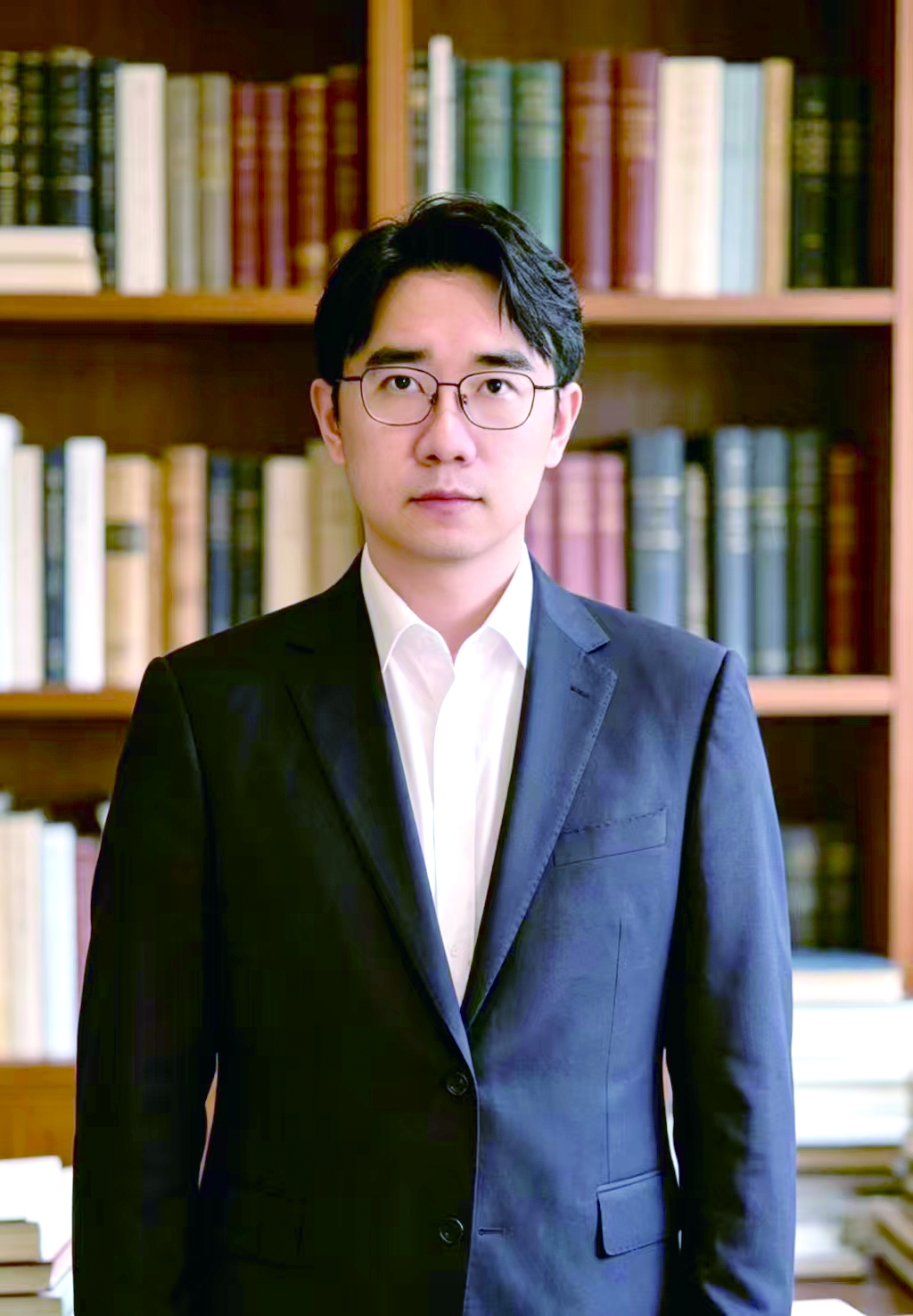
Before becoming an award-winning science fiction writer, Baoshu was simply a fan fascinated by Hugo Award winner Liu Cixin's The Three-Body Problem. His desire to explore the universe created by the blockbuster trilogy led him to write The Redemption of Time (Remembrance of Earth's Past), a fan work that later became a published novel.
Years later, Baoshu has become one of the notable voices in Chinese science fiction. He was honored with the Mao Dun Newcomer Award this year, one of China's most prestigious literary awards for young writers. Established in 2015, the award recognizes outstanding writers and critics under the age of 45.
The award committee said his works have expanded the possibilities of science fiction through exploration of time, civilizations and the impact of technology on everyday life.
The honor adds to a growing list of achievements. Baoshu had previously won the Galaxy Award, China's equivalent of the Nebula Awards. His short story Tasting the Future Delicacy Three Times was a finalist for the Hugo Award for Best Short Story in 2024.
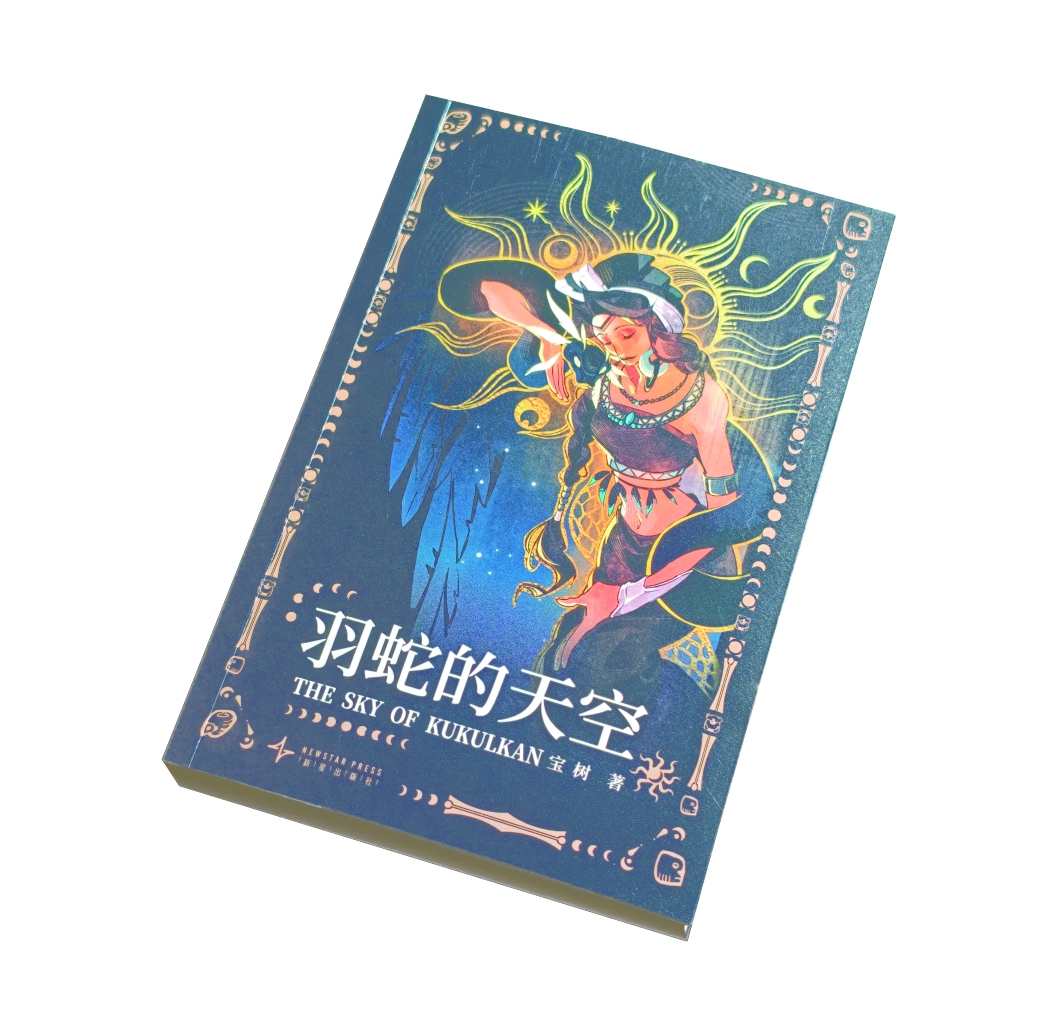
In his latest novel, The Sky of Kukulkan, published by New Star Press, Baoshu turns his fascination with the ancient Maya civilization into a story about humanity itself. The book is Baoshu's first major work after receiving the Mao Dun Newcomer Award.
Set during the final period of the Maya Classic era, the novel follows a fallen prince who, with the help of a priestess, gradually uncovers the secrets behind astronomical movements, unusual solar phenomena and the legend of the Feathered Serpent deity.
For Baoshu, the story is ultimately not only about the Maya, but also a reflection of humanity itself, its pursuit of knowledge and the universe, as well as the conflicts driven by human flaws.
"I think the most fascinating part of this story is that the Maya civilization is a microcosm of humanity itself," Baoshu told the Global Times. "It reflects mankind's journey to explore the universe and seek truth, while also showing how human weaknesses, such as greed and hostility, can lead to endless conflicts within society."
The road to sci-fi
Born in 1980, Baoshu developed his passion for writing early. After moving to Haiyan, East China's Zhejiang Province, at the age of 6 with his parents, who worked in nuclear power construction, he spent much of his childhood reading science fiction and popular science books in local libraries.
As a primary school student, he began writing his own science fiction stories, although he said that his early works were immature.
His pen name, "Baoshu," has a much simpler origin. More than two decades ago, he chose it casually as an online username because he was a fan of Chinese martial arts novelist Jin Yong and created several usernames inspired by characters from Jin Yong's works. Most disappeared over time, but "Baoshu" remained.
After studying philosophy at Peking University, he continued writing short stories. His professional science fiction career began in 2010 while studying in Belgium, when his admiration for Liu Cixin's The Three-Body Problem inspired him to write the fan fiction novel The Redemption of Time (Remembrance of Earth's Past).
"His work has always set a benchmark for me, a standard I hope to approach even if it remains a distant goal," he said.
For Baoshu, The Redemption of Time (Remembrance of Earth's Past) was driven mainly by his love for Liu's fictional universe and his desire to explore the possibilities beyond the original trilogy.
"The world created by The Three-Body Problem is so rich and diverse that you feel there are many stories behind it that were not told," he said.
"I wanted to express some of those possibilities in my own way."
Sci-fi future
Baoshu said that, looking ahead, science fiction will continue expanding as technology changes society.
With technology such as artificial intelligence (AI) advancing at an unprecedented pace, the boundary between science fiction and reality is becoming increasingly blurred. Ideas once imagined only in novels are now entering everyday life, creating new questions and possibilities for writers to explore.
AI, for example, has created new creative opportunities and raised new questions about humanity's relationship with machines. But he noted that AI is not an entirely new topic for science fiction.
"Science fiction has been writing about AI for many years," he told the Global Times. "At different stages, new technologies emerge and connect with new social issues, creating new possibilities for storytelling."
He expects one major direction for future science fiction will be "science fiction realism" - stories that focus on how technology affects ordinary life, society and human emotions.
Another challenge for Chinese science fiction is finding deeper connections with local culture.
"Science fiction was once seen as a relatively foreign literary form because it originated overseas," Baoshu said. "But as the genre expands into deeper areas of social life, it also changes how we understand the past."
He said, as science fiction continues to gain popularity in China, the genre is creating more opportunities for new voices.
Efforts to promote new forms of popular literature have given people from different backgrounds more opportunities to write and share their voices.
。

二 |
Current article:http://vpyiro.zhouangnaoguangsundianzhenmou.cfd/list_cdkz/eeavr.html
Published on:00:00:00


