乡约
Politics-driven Graham-named Russia sanctions bill exposes US political coercion in global energy supply chains: expert_我的网站

A | 中新社北京8月21日电 (李纯 马百川)记者21日从解放军西部战区空军获悉,北京时间8月21日凌晨,参加中埃“文明之鹰-2026”空军联合训练的中国空军多型战机和参训官兵,跨洲际投送至埃及空军某基地。

B |
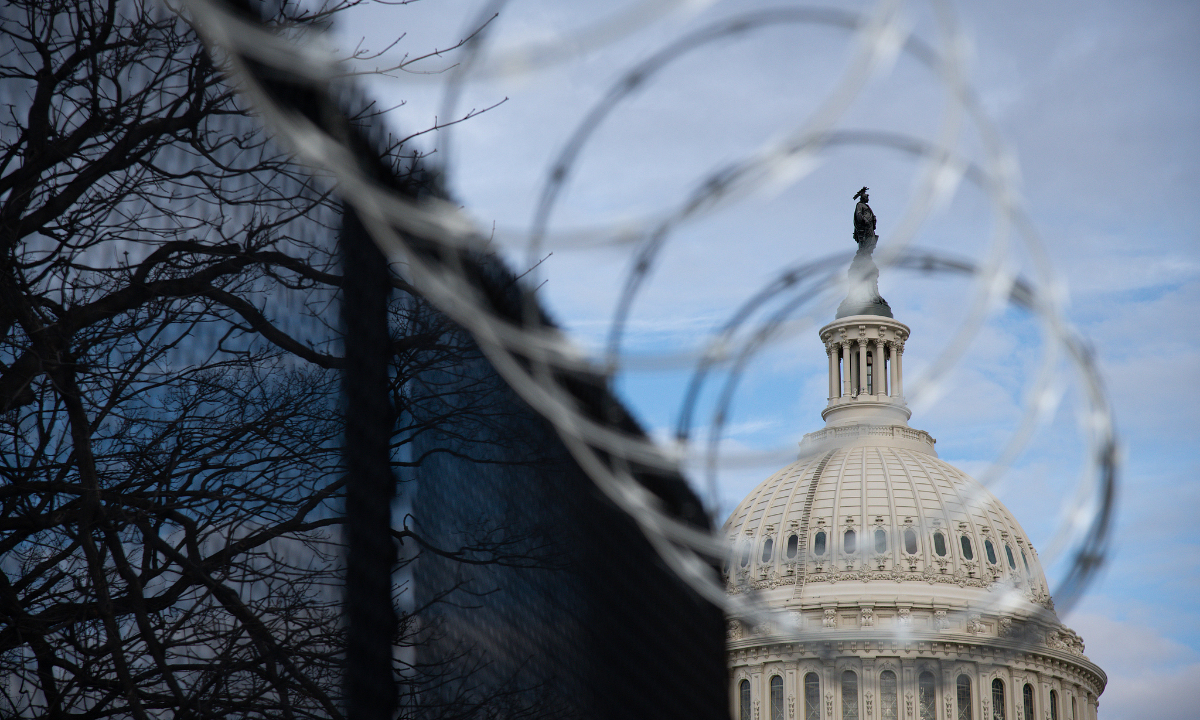
File picture of US Capitol. Photo: VCG
The US Senate on Friday overwhelmingly approved a bill that would impose sanctions on buyers of Russian oil, a measure that had long been championed by the late senator Lindsey Graham before his death last month, CNBC reported. A Chinese expert criticized the legislation, warning that if implemented, the bill, driven largely by political motives aimed at catering to US domestic political correctness, could severely disrupt the already fragile global energy market and economy. He also noted that the bill is essentially a tool of political coercion, weaponizing tariffs and unilateral sanctions to hijack normal global energy trade and override sovereign economic choices of independent nations.
The legislation, named The Lindsey O. Graham Sanctioning Russia and Iran Act of 2026, aims to hurt Russia's war effort in Ukraine by penalizing purchasers of Russian oil and Russian leaders. It passed with bipartisan support 86-11 and will now proceed to the House, which is on recess until September, per CNBC.
The bill would impose tariffs of up to 100 percent on countries that are among the top five purchasers of Russian crude oil or gas, which includes China and India.
It also includes sanctions targeting Russian leaders, officials, targeting Russian leaders, oligarchs and financial institutions. At the request of US President Donald Trump, the bill extends sanctions on Iran's weapons and energy sectors, CNBC reported.
Notably, the bill's excessive tariff discretion has sparked fierce internal doubts within US political circles. Representatives Gregory Meeks of New York and Don Beyer of Virginia said in a statement they still had "fundamental concerns" about the tariff powers for the president, who has made them a central piece of his "America First" approach to foreign policy.
"What the bill does grant ... are sweeping new tariff authorities that the president could weaponize with abandon, as he has repeatedly done in the past," said Meeks, the top Democrat on the House Foreign Affairs Committee, and Beyer, the senior Democrat on the Joint Economic Committee, according to Reuters.
Chinese experts have strongly criticized the bill's politically driven nature, its economic coercion, and its severe spillover risks to the global economy.
The bill, aimed at putting pressure on Russia, would disrupt global energy markets and create new uncertainties for the world economy if implemented, Yang Jin, associate research fellow at the Institute of Russian, Eastern European and Central Asian Studies under the Chinese Academy of Social Sciences, told the Global Times.
Many economies retain legitimate, market-based energy cooperation with Russia out of practical economic and energy security needs. Russia's energy exports have long been a key component of the global energy system, with countries including India and some European nations continuing to rely on Russian oil and gas, said Yang, noting that even some European countries have received exemptions to maintain energy imports from Russia, underscoring the role of Russian supplies in supporting economic stability.
India's reliance on Russian crude increased further after the conflict in West Asia disrupted shipping through the Strait of Hormuz. With Gulf supplies affected during the US war on Iran, Indian refiners turned more heavily towards Russian oil as an alternative source, Indian media Hindustan Times reported on Saturday after US Senate passed the bill.
When asked about the bill on July 15, Lin Jian, spokesperson from China's Ministry of Foreign Affairs said that China firmly opposes unilateral sanctions that have no basis in international law or authorization of the UN Security Council, and will take necessary measures to firmly defend the legitimate rights and interests of Chinese businesses and citizens.
Practicing double standards and resorting to coercion and pressuring will eventually prove to be self-defeating, said Lin.
Yang further pointed out that the push for the bill, labeled after Lindsey Graham, who was known as one of the toughest Russia hawks in Washington, lays bare Washington's distorted domestic political logic.
The legislation, which represents another typical case of US hegemonic long-arm jurisdiction, is largely designed to ease US domestic governance pressure. As the Trump administration fails to deliver substantive progress in de-escalating the Russia-Ukraine conflict as promised, ramping up external sanctions and forcing third-party sovereign countries into abandoning normal economic and trade cooperation has become a convenient political tool for US politicians to showcase tough posturing and ease domestic pressure, Yang said.
。
中埃“文明之鹰-2026”空军联合训练是两国空军第二次开展联合训练,中国空军派出了歼击机、加油机、特种机、直升机等多型多架飞机成体系参训。
中国空军航空兵某部李明阳表示,转场途中,加油机既承担空中加油任务,也是空中指挥节点。任务前期,官兵们针对航线规划、气象条件、特情处置等方面做了细致的研究和准备。“近年来,我们多次执行境外任务,积累了经验、淬炼了能力,我们有充分的信心圆满完成后续任务。”
据悉,飞行编队克服航时长、气象复杂叠加等困难,跨越6000多公里,途经两大洲四个国家,飞行近9个小时;通过组织跨境体系投送和快速装卸载,检验了远程投送、敏捷部署和体系作战能力。
抵达埃及后,中国空军官兵迅速组织物资卸载、装备整理、交流协同等工作,投入演训日飞行准备。(完) 【编辑:万纪玮】。
Current article:http://vpyiro.zhouangnaoguangsundianzhenmou.cfd/list_hvda/2qwzq.html
Published on:09:59:28

 9部门发文激发下沉市场活力 活跃县域消费
 沈梦露加盟凯尔特人女足
 沃尔玛入华三十年:扎根中国,共建美好
 两部门预拨8000万元支持河南、湖北、安徽应急抢险救灾
 Chinese FM dismisses Palau president's claims on China's missile test launch as 'groundless, malicious in intent, not worth mentioning'
 俄罗斯总统新闻秘书:美国中央情报局局长访问莫斯科,访俄期间未安排与普京会面
查看所有0条评论>>